
Sympathy Flowers Gold Coast: A Local Florist’s Guide to Honouring Loved Ones
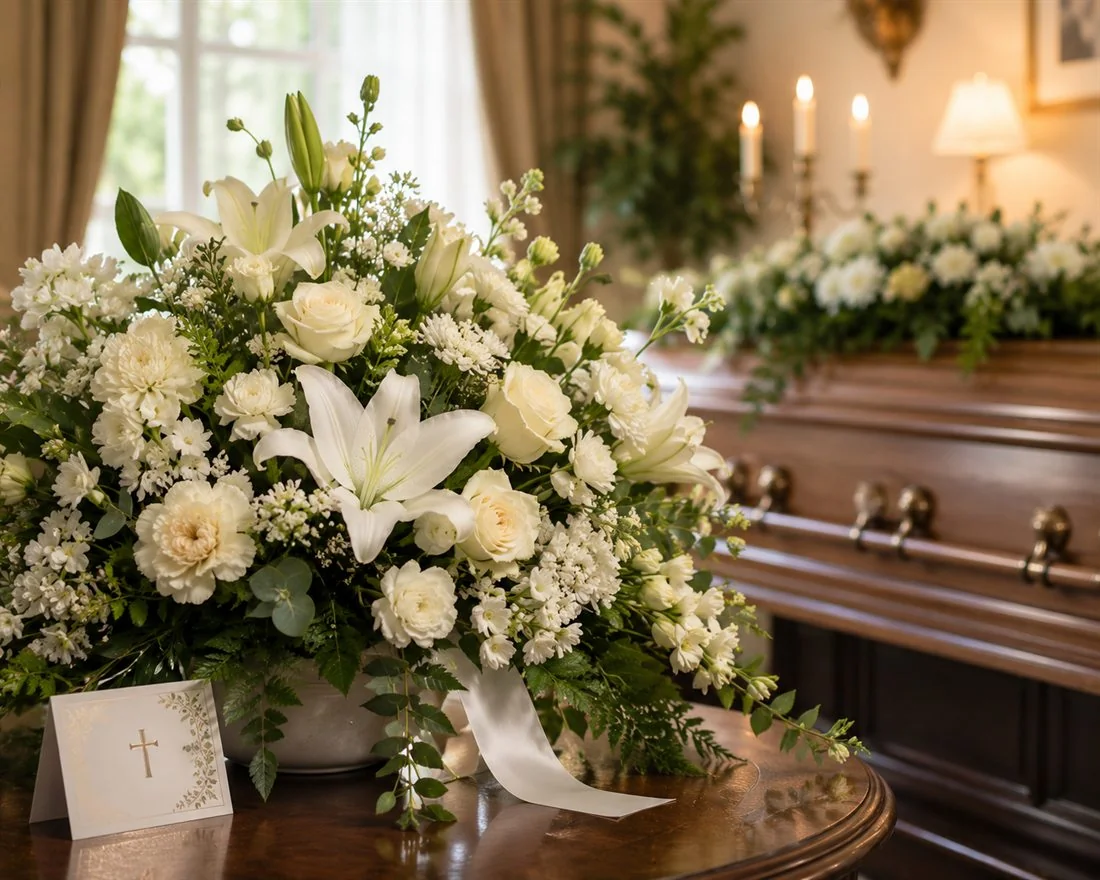
When someone you care about loses a loved one, the urge to do something is overwhelming — and sympathy flowers Gold Coast families have received for generations are often that something. But when you’re standing in front of a florist’s website with a list of arrangements and prices, none of it feels quite right. What do you send? Where do you send it? Is a wreath too formal? Is a posy not enough?
This is the conversation we’d have with you if you walked into our shop at Australia Fair Metro in Southport. After years of preparing sympathy and funeral flowers for Gold Coast families — for services at Allambe Memorial Park, Mt Gravatt Crematorium, and dozens of churches and chapels across the Coast — we’ve learned that the right tribute has less to do with how much you spend, and more to do with sending the right thing at the right time.
Here’s how to choose.
First: are you sending to the service, or to the family?
This is the single most important question, and it changes everything else. People often default to “send flowers” without thinking about where — and the wrong choice can either go unseen, or arrive at a family’s home when they’re already overwhelmed.
Send to the funeral service when:
- You won’t be attending
- You want to publicly honour the person who passed
- The family has indicated flowers are welcome (check the funeral notice — some families request donations to charity instead)
- The arrangement is large or formal (wreath, standing spray, casket spray)
Send to the family’s home when:
- The service has already happened
- You want to offer ongoing comfort in the weeks after
- The family lives locally and you know they’d appreciate something at home
- The arrangement is smaller and longer-lasting (bouquet, vase arrangement, peace lily)
Both are correct. Neither is “more thoughtful” than the other. They just serve different purposes.
What to send: a plain-English guide
Florist websites love to list ten types of arrangements with formal names. Most people don’t know the difference between a “sheaf” and a “casket spray,” and they shouldn’t have to. Here’s the practical version.
For the funeral service itself
Standing sprays are the tall, fan-shaped arrangements you’ve seen on easels at services. They’re highly visible, make a statement, and are appropriate from close friends, work colleagues, or extended family. Expect to spend $180–$350 depending on size and flower choice.
Wreaths are the circular arrangements you’ll see hung or placed near the coffin. The circular shape symbolises eternity. They’re traditional, dignified, and a safe choice when you’re not sure. $150–$300.
Casket sprays are the large arrangements that sit directly on top of the coffin. These are almost always chosen by immediate family — partners, children, parents. Don’t send one unless you’re in that inner circle. $300–$600+.
Sheaves are simple, hand-tied gathered bunches laid across the coffin or beside the service. They’re elegant in their restraint and increasingly popular for more contemporary services. $120–$250.
For the family’s home
Sympathy bouquets and vase arrangements are what to send if you’re delivering to a house. They sit nicely on a kitchen bench or dining table without needing a tall vase or fuss, and the family doesn’t have to deal with arranging anything. $80–$200.
Peace lilies and potted orchids are an underrated option. They last for months rather than days, which means they offer comfort long after the initial wave of support has passed. Grief doesn’t end after the funeral — and a plant that’s still alive three months later is a quiet reminder that the person who sent it still cares. $60–$150.
Choosing sympathy flowers Gold Coast florists recommend”
A few things specific to our climate and culture worth knowing.
Heat and longevity matter here. Sympathy flowers ordered in January need to handle the trip from a florist to the service, then sit out at a graveside or in an air-conditioned chapel. Lilies, chrysanthemums, native banksias, and orchids all hold up beautifully. Hydrangeas and softer roses can struggle in summer — your florist should be steering you away from those in peak heat without you having to ask.
White is traditional but not required. White lilies, white chrysanthemums, and white roses are the most common choice and always appropriate. But for celebrations of life — services that are explicitly focused on joy and memory rather than mourning — colour is welcome. Native arrangements with banksias, kangaroo paw, and proteas in warm tones have become popular for Gold Coast services in recent years, especially for older Australians who lived close to the land.
Cultural considerations. Different cultural and religious traditions have different conventions around funeral flowers. Some Buddhist services prefer white only. Some Jewish traditions ask for no flowers at all (donations instead). Some Catholic services welcome large, formal arrangements; others prefer simplicity. If you’re unsure and the family is from a tradition you don’t know well, it’s perfectly acceptable to call the funeral director and ask. They expect these calls.
How to write the card
The card is often harder to write than the order is to place. A few principles that help:
- Short is fine. Don’t agonise over length. Two sentences sent on time is better than a paragraph sent a week late.
- Mention the person by name. “Thinking of you all as you remember Tom” is so much warmer than “thinking of you in this difficult time.”
- Avoid clichés if you can. “Sorry for your loss” is fine, but if you can replace it with something specific — a memory, a quality of the person, a small kindness they did for you — the family will read your card twenty times.
- Sign it clearly. Especially if you’re a colleague, neighbour, or distant friend. Grieving families lose track of who’s who. “Sarah from across the street” is more useful than just “Sarah.”
A few simple, sincere examples:
“Thinking of you and the family. Tom was one of the kindest people I’ve ever worked with. We’ll miss him terribly. — Mark and the team at [Company]”
“There are no right words. Please know we’re here whenever you need us. With so much love, the Hendersons.”
“In memory of a beautiful soul. Thinking of you. — Jen”
Practical things to know about delivery on the Gold Coast
A few things we tell families regularly:
Delivering to a funeral service. The flowers need to arrive before the service starts — ideally 1–2 hours before. Give the florist the service venue, the time the service starts, and the deceased’s full name (so the card is included on the right tribute). For services at chapels and crematoriums, the funeral director will receive flowers on arrival.
Delivering to a hospital. If the family member is still in hospital and the loss is recent, flowers can be sent there too. Flowers of Southport delivers to all Gold Coast hospitals — Gold Coast University Hospital, Pindara, John Flynn, Robina, and more — at no charge. Just include the patient’s full name and the ward.
Delivering to the family home. If you don’t know the family well, you can have flowers held at the florist and delivered the day after the service, when the rush of visitors has eased. Sometimes a quiet bouquet arriving on Tuesday morning, when everyone else has gone home, is the most comforting gift of all.
Same-day delivery. Order before 2pm Monday to Saturday and we can usually deliver same day across the Gold Coast. For service deliveries with a tight timing, call us directly — we’ll prioritise it.
When you don’t know what to do, just send something
People often delay sending sympathy flowers because they don’t know exactly what to write, or which arrangement is “right,” or whether they’re close enough to the family to send anything at all. Here’s the truth: families remember who reached out. They rarely remember the exact bouquet.
If you’re stuck, the simplest move is to call us and tell us what you know — who passed, who you’re sending it to, your budget, and your relationship to the family. We’ll put together something appropriate, write a card that sounds like a human wrote it, and get it where it needs to go.
That’s what we’re here for.